
This article is for bars and restaurants with small kitchens, and also for anyone preparing an opening who can still decide the layout. It explains how to organise work so the team has everything at hand during service, with no crossovers or unnecessary movement.
Workflow before furniture
A small kitchen layout works when food moves in one direction: receiving, storage, preparation, cooking and the pass. Backtracking, such as carrying something raw next to a finished dish, is what causes crossovers, lost time and contamination risks.
Before changing equipment, it helps to map the route of the three or four best-selling dishes and check where each cook stops. That plan shows which preparations should be closest to each burner.
Standard containers
Gastronorm containers make the most of refrigeration and surface space. Fractional sizes (1/3, 1/6, 1/9) fit preparation counters, cold rooms and ovens, so a preparation moves from one appliance to another without changing container. Using few different sizes simplifies washing and storage.
Refrigeration at the workstation
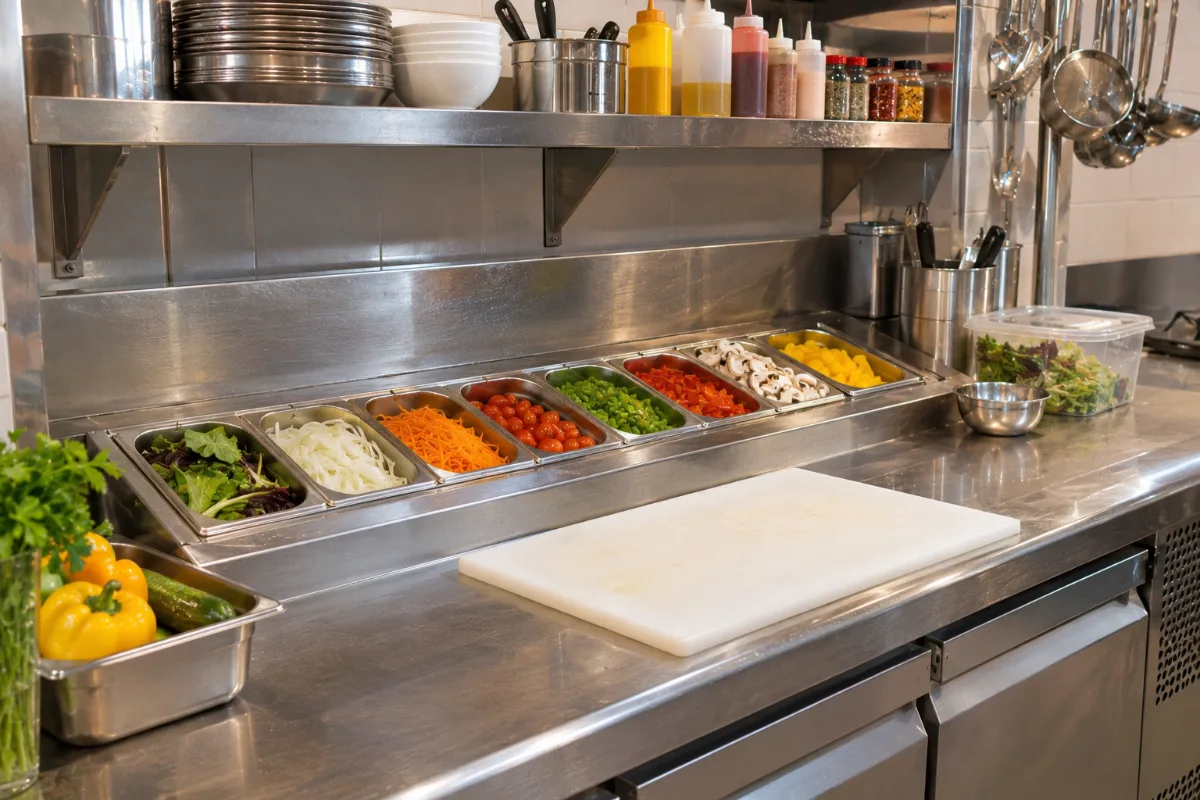
The undercounter refrigerated counters turn the workspace into cold storage: you prepare on top and store that station's ingredients underneath. The refrigerated preparation counter, with pans on top, keeps assembly ingredients in view (cut vegetables, sauces, cheeses) and reduces door openings.
The difference between the two lies in how they are used. A flat-top refrigerated counter is for cutting, portioning and plating on a clear surface; a preparation counter with pans is more efficient for quick-assembly stations such as sandwiches, salads or pizzas.
What to prepare in advance and how much
- Draw up a mise en place list for each station, with quantities based on actual sales for that day of the week.
- Portion in advance what is repeated: portions of meat, fish and sides ready to cook.
- Vacuum-pack the portions that will not be used that day; they take up less space and are easier to organise in the cold room.
- Label each container with the product and preparation date, and put the oldest at the front.
- Make sauces and stocks outside service hours to keep the burners free.
Order and cleanliness during service
Continuous cleaning is part of mise en place: one board, one knife and one cloth per station, and a clear surface between orders. In a small kitchen, piled-up dirty utensils take up the space the next dish needs.
Vertical space completes the organisation: shelves above the counters for spices and frequently used utensils, magnetic strips for knives and hooks for pans. Anything not used during service leaves the station.
More dishes in our section Professional cooking.


