
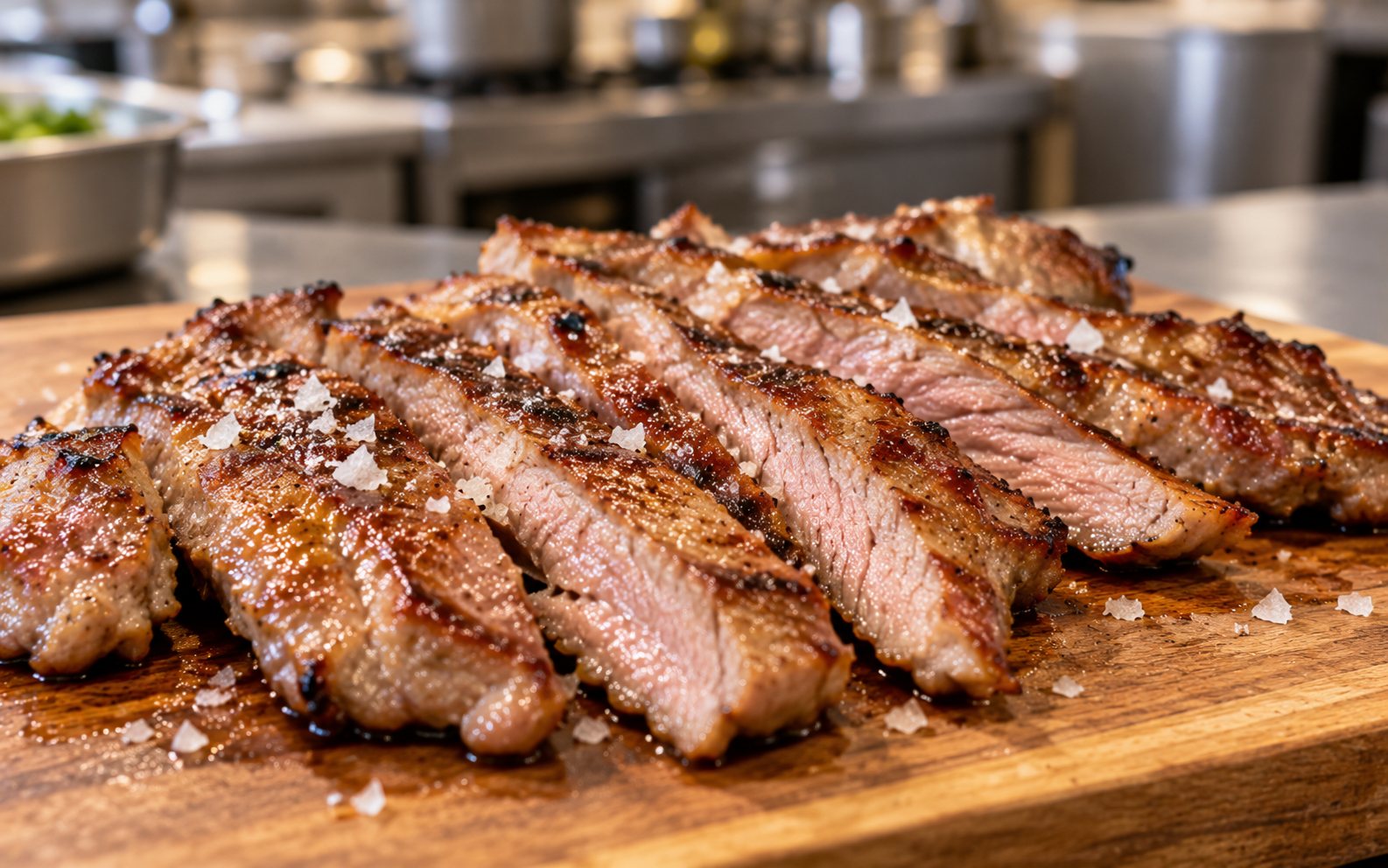
Iberian secreto is one of those cuts that saves a menu. It is cheap per kilo compared with a tenderloin, it cooks in under ten minutes and, handled well, it is the dish people order again and again. The problem is that it is ruined remarkably easily, almost always for the same couple of reasons: salting at the wrong time and a plate at the wrong temperature.
Here is the recipe, but told from the griddle.
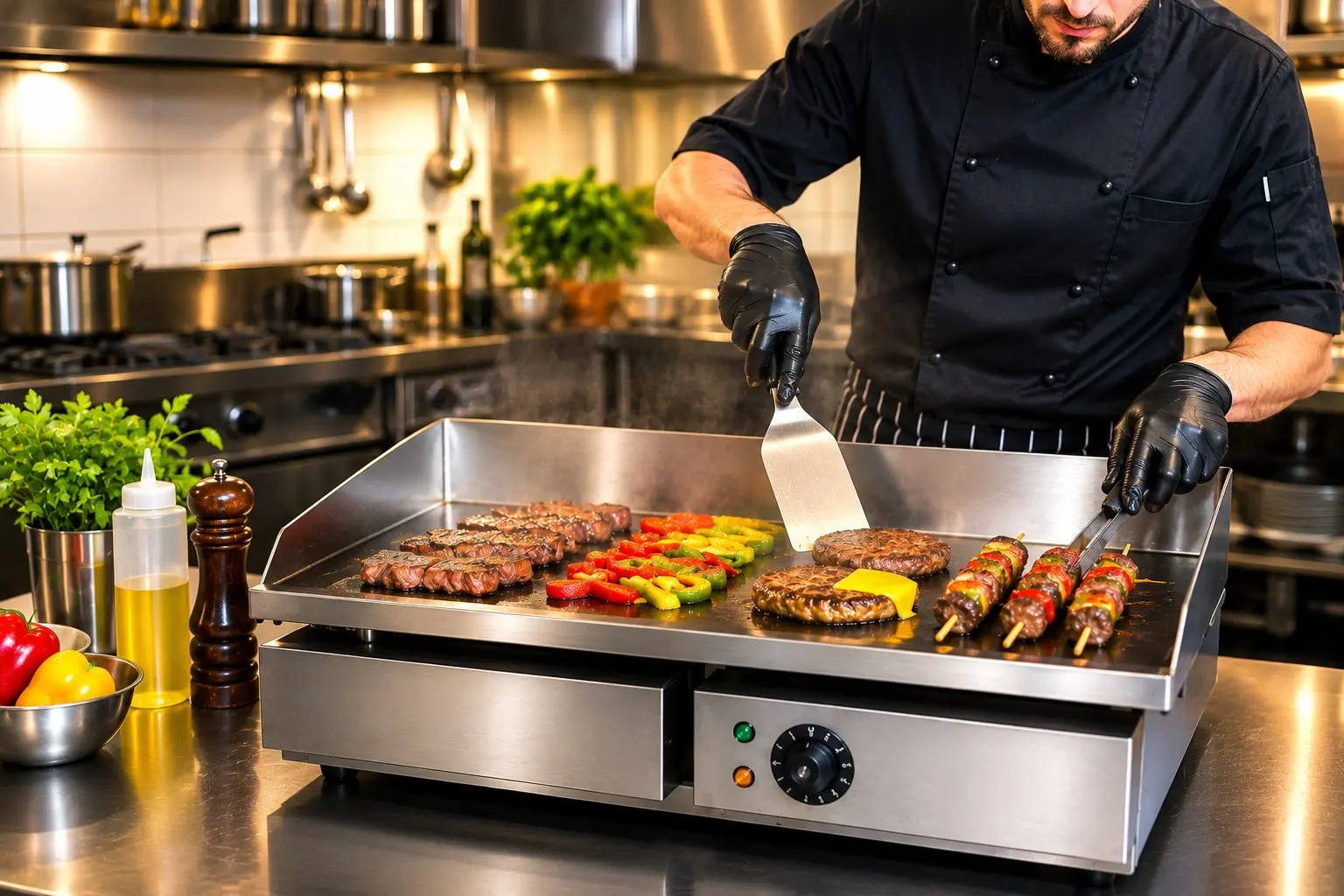
Salt: not before, not after, it depends on when
This is the one that causes the most arguments in a kitchen, and the answer is neither "before" nor "after". There are three moments and only one of them is wrong.
- 40 minutes or more in advance. Salt draws water from the surface, but there is time for that water to go back in, taking the salt with it. The meat is seasoned inside, not just outside. It works well for thick cuts, like a T-bone.
- Right before it goes on the plate. The salt has no time to draw out juice. Well-seasoned surface, intact interior. It is the practical option at the pass, and it is what we would do with secreto.
- When taking it off, as flakes. It adds crunch and a hit of salt in the mouth. It can be combined with the previous one.
The mistake is salting 15 or 20 minutes before. It is the worst possible moment: the salt has drawn the juices to the surface and they have not had time to go back in. The meat reaches the plate wet, and wet meat does not brown: it stews in its own water. That is the grey steak we have all seen at some point.
The plate temperature, which is half the dish
A cold plate does not sear, it boils. A plate that is too hot burns the outside and leaves the centre raw. For Iberian secreto the right range is 220–250 °C, which is the one for white meats and pork.
As a general reference for the rest of the menu:
| Product | Searing | Finish |
|---|---|---|
| Red meat | 250–300 °C | 180–200 °C |
| Pork and poultry | 220–240 °C | 180 °C |
| Thin fish fillets | 150–200 °C | — |
| Thick fish loins | 260 °C | 220 °C |
| Prawns and scallops | 200–250 °C | — |
| Vegetables | 180–220 °C | — |
This is where the plate thickness stops being a catalogue figure and shows on the plate. A solid plate stores heat; when you put half a kilo of cold food on it, the temperature drops and then recovers. With a thin 6 mm plate it drops a lot and takes time to come back: the first thirty seconds, the ones that form the crust, are lost. With 8 or 10 mm of ground steel the drop is much smaller. That is why a thick plate is not a luxury: it is what lets you keep working without quality slipping dish after dish.
Smooth, ribbed or mixed for this cut?
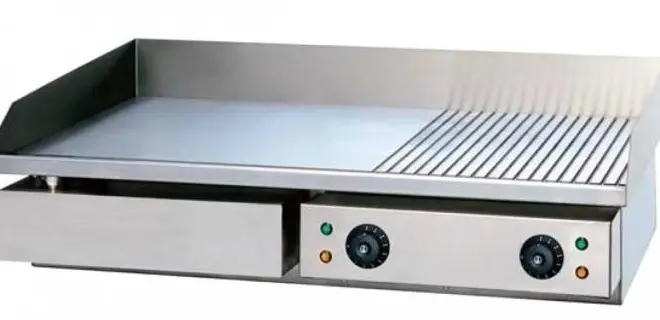
All three work. They do different things and it is worth knowing which:
- Ribbed. It suits secreto best. It marks the meat like a grill and, above all, lets the fat drain through the grooves instead of staying underneath frying the meat. Secreto has a lot of marbled fat; on a smooth plate it ends up swimming in it. The 55 × 35 ribbed griddle in 8 mm ground steel is the straightforward choice.
- Smooth. More versatile for the rest of the menu: breakfasts, eggs, fish, vegetables, smash burgers. It works with secreto, but you will have to keep removing the fat. If you will only have one griddle for everything, the 55 × 35 smooth griddle with a 10 mm plate is the most all-round option.
- Mixed. The real solution if you serve meat and sides at the same time. You sear on the ribbed side and cook the peppers and potatoes on the smooth side, without switching appliances or waiting. The 73 × 40 mixed griddle is the one that gets the most out of a high-volume service.
Iberian secreto, step by step
- Take it out of the cold room 20 minutes before. A piece at 4 °C cools the plate down suddenly and cooks from the outside in with too much difference.
- Dry it well. Use paper, generously. Any water left on the surface is browning you will not get.
- Plate at 220–250 °C. Oil the meat, not the plate: a drizzle of oil rubbed over the piece by hand. Oil on the plate at that temperature only gives you smoke.
- Salt right now, before it touches the metal.
- 3 to 4 minutes per side and do not touch it. Do not move it, press it or lift it to look. It releases on its own when the crust has formed; if it sticks, it is not ready yet.
- Aim for 63–65 °C at the centre. That is the point at which the fat melts and the meat stays juicy. Above it, it starts releasing water and turning tough. A probe thermometer costs little and settles every argument.
- Rest for 3 to 5 minutes. This step is not optional. If you cut it straight off the plate, the juices end up on the board instead of staying inside.
- Cut against the grain, into thin strips. Secreto has a very pronounced grain; cut with it, it is tough even if you cooked it perfectly.
Gas or electric? A myth worth clearing up
You often hear that gas "gives more flavour". On a barbecue or a grill that is true, because the fat drips onto the embers and the smoke goes back into the food. On a griddle, it does not. The plate is solid and closed: the food never touches the flame or the combustion gases. All the flavour comes from the browning on the steel, and that depends on the plate temperature and thickness, not on whether the heat comes from an element or a burner.
What does change between them is how they work:
- Electric: more even temperature across the whole surface and finer control. Better for fish, eggs and delicate food. And it plugs in: no gas bottle, no gas installation and no building work.
- Gas: heats up faster and recovers more quickly when you load it all at once at peak time. And it usually costs less to run if you work many hours in a row.
For a bar or café, electric is more than enough. If you have high, sustained volume, look at the gas fry-tops, which are in another league: 15 mm plate and modular format to fit into the cooking line.
In short
Salt right before it goes on or in flakes at the end, never twenty minutes before. Plate at 220–250 °C. Three or four minutes per side without touching it. 63–65 °C inside. Rest. And against the grain when cutting.
The plate does the rest. You can see all our professional griddles, electric and gas, or message us on WhatsApp at 622 872 311 telling us what you serve and how many covers you do at once, and we will tell you which one suits you.
More dishes in our section Professional cooking.


